

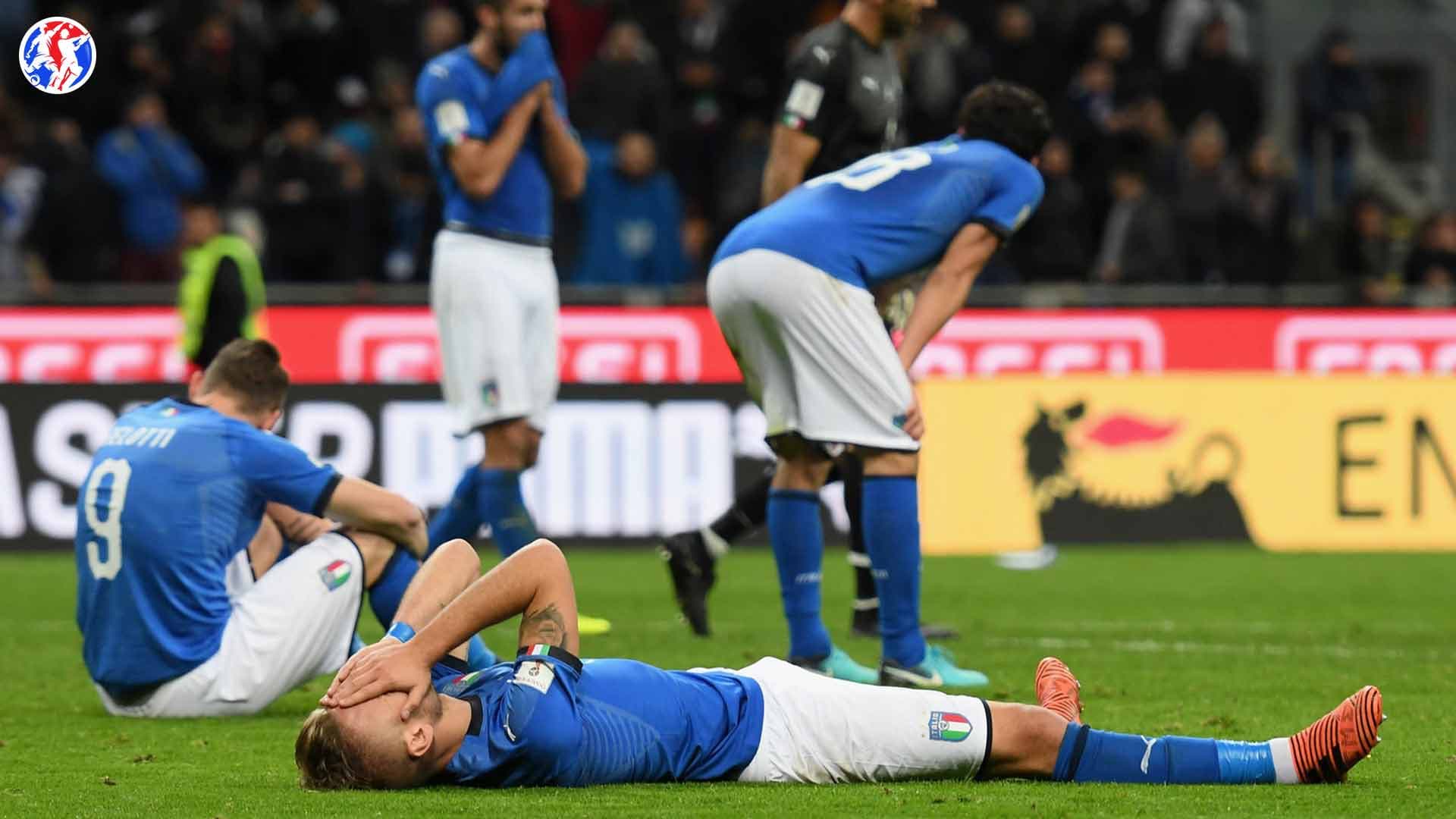
A World Cup without Italy still feels wrong. For many fans, especially those who grew up watching football in the early 2000s, Italy was not just a team. It was a style, an identity built on defensive discipline and tactical intelligence. There was a time when very few sides could truly outthink them.
And yet, here it repeats again. For the third consecutive time, Italy have failed to qualify for the FIFA World Cup. What once felt impossible is now becoming a pattern.
Their latest setback, a playoff defeat to Bosnia and Herzegovina, has triggered more than disappointment. It has sparked a crisis. Within hours, Gianluigi Buffon and federation president Gabriele Gravina stepped down. Buffon called it “an act of responsibility,” admitting the team had failed in its primary objective.
But this decline did not begin overnight. To understand it, you have to go back to the Calciopoli scandal. Italian football never fully recovered. Juventus were relegated, trust in the system collapsed, and Serie A took a financial hit, with revenues dropping sharply in the 2006–07 season.
What followed was a slow decline. Clubs struggled with financial instability, governance issues persisted, and Italy gradually lost its grip on European dominance.
The contrast over time is telling. When AC Milan won the Champions League in 2007, seven Italians started the final. By 2010, when Inter lifted the same trophy, there was not a single Italian in the starting XI. That shift reflected a deeper identity crisis.
Since then, success has been inconsistent. The UEFA Euro 2020 triumph offered hope, but it now feels more like an exception than a turning point.
There were efforts to rebuild. In 2010, Roberto Baggio proposed sweeping reforms focused on grassroots development and coaching structures. His vision was extensive, but it was never implemented. He resigned in 2013, frustrated by the lack of support.
Fast forward to today, and the issues remain. Only a couple of Italian clubs are still active in European competitions this season. At the international level, the team looks uncertain, caught between generations.
The reaction to failure has been familiar. Resignations have followed, and pressure is mounting on head coach Gennaro Gattuso. He has avoided discussing his future, calling the defeat “another setback.”
That word matters. Another. Italy’s decline has been gradual. Missed opportunities, delayed reforms, and structural inertia have quietly built up over time.
What makes this fall so striking is what Italy once represented. This is a nation that shaped modern football thinking. To see it now struggling to compete at the highest level is difficult to ignore.
There will be changes. But unless the system itself evolves, unless long-standing issues are addressed, those changes may not matter.
Italy’s absence from the World Cup is no longer just a shock. It is a warning.